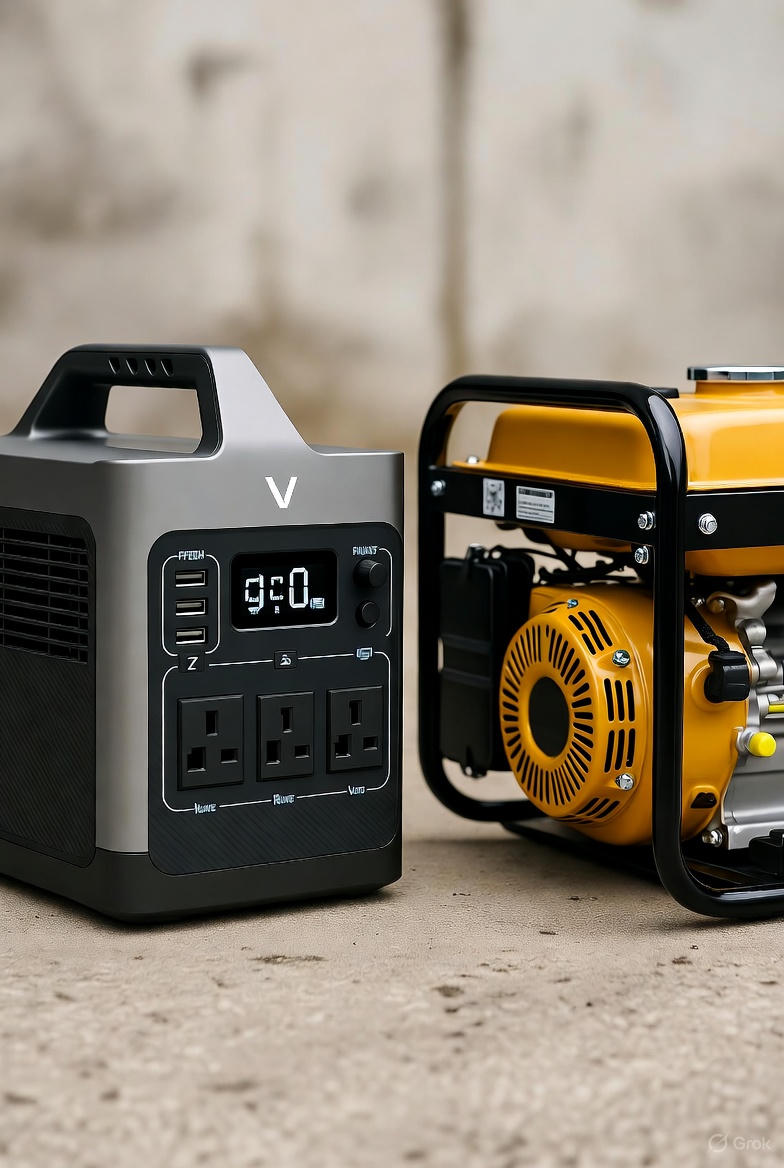
Gas Generators vs Solar Generators: Which One Should You Choose?
When it comes to powering your home, RV, or outdoor adventures, gas generators and solar generators are two of the most popular options. Both can keep your lights on and devices running during blackouts or off-grid trips, but they work very differently. In this blog, we’ll compare gas generators vs solar generators, explore their advantages and disadvantages, and help you decide which one fits your needs best.
What Is a Gas Generator?
A gas generator uses gasoline or propane to produce electricity. It burns fuel in an engine to create power, which is then converted into usable electricity for your appliances, tools, or entire home.
Modern quiet gas generators are designed with sound-reducing technology, making them less noisy than older models. They’re commonly used during power outages, for construction work, and for camping trips where electricity isn’t available.
What Is a Solar Generator?
A solar generator uses the sun’s energy to create electricity. It includes solar panels that collect sunlight, a charge controller, a battery for storage, and an inverter that turns the stored power into usable electricity.
Unlike gas generators, solar generators don’t need fuel — just sunlight. They’re ideal for emergency backup, outdoor adventures, and eco-friendly living.
Key Differences Between Gas and Solar Generators
| Feature | Gas Generator | Solar Generator |
|---|---|---|
| Power Source | Gasoline or propane | Sunlight |
| Noise Level | Usually loud (quiet models are better) | Silent |
| Running Time | Continuous as long as fuel is available | Limited to battery capacity |
| Maintenance | Regular oil changes, fuel checks | Minimal maintenance |
| Environmental Impact | Produces emissions | 100% clean energy |
| Cost Over Time | Fuel adds ongoing costs | Free power from sunlight after setup |
| Setup Difficulty | Simple plug-and-play | Needs sunlight and solar panels |
Advantages of Gas Generators
- Reliable Power Anytime: Gas generators can run day or night, as long as you have fuel.
- High Power Output: Perfect for running heavy appliances, tools, or even your whole house.
- Quick Startup: Works instantly with the pull of a cord or push of a button.
- Widely Available: Gasoline and propane are easy to find anywhere.
Disadvantages of Gas Generators
- Noise and Fumes: Even quiet gas generators make some noise and release exhaust.
- Fuel Costs: You need to keep buying gas or propane, which adds up over time.
- Maintenance Required: You’ll need to change oil, check filters, and keep parts clean.
- Not Eco-Friendly: Gas generators emit carbon dioxide and other pollutants.
Advantages of Solar Generators
- Silent Operation: Solar generators make no noise, great for homes and camping.
- Free Power: Once you set it up, sunlight is 100% free.
- Low Maintenance: No oil changes or filters to worry about.
- Eco-Friendly: Solar generators produce clean, renewable energy.
Disadvantages of Solar Generators
- Dependent on Sunlight: No sun means limited or no power generation.
- Lower Power Output: Solar generators can’t power large appliances for long.
- High Initial Cost: The upfront investment can be expensive.
- Battery Limits: Once the battery is drained, you must wait for it to recharge.
Which One Should You Choose?
The best choice depends on how and where you plan to use it:
- Choose a gas generator if you need high power output and reliable performance anytime, even at night or during cloudy weather. A quiet gas generator is ideal for backup power at home or work sites.
- Choose a solar power generator if you prefer clean, quiet energy and don’t need to power heavy equipment. They’re perfect for small electronics, camping, and eco-conscious lifestyles.
If you can afford it, having both offers the best of both worlds. Solar power for daily use and a gas generator as a backup for cloudy days or emergencies.
My Recommendation
If you value reliability and power, go for a quiet gas generator. If you care about sustainability, silence, and savings over time, invest in a solar generator. Both have their place, and understanding their strengths helps you make a smart, long-term choice for your energy needs.